What are the three RFID frequency bands?
RFID is not a single technology but a family of them, split by the radio band a tag and reader use to talk. The three bands in mainstream use are low-frequency (LF), high-frequency (HF) and ultra-high-frequency (UHF). Each has different physics, and that physics — not marketing — is what determines range, read speed, tag cost and how the tag behaves near metal and liquids.
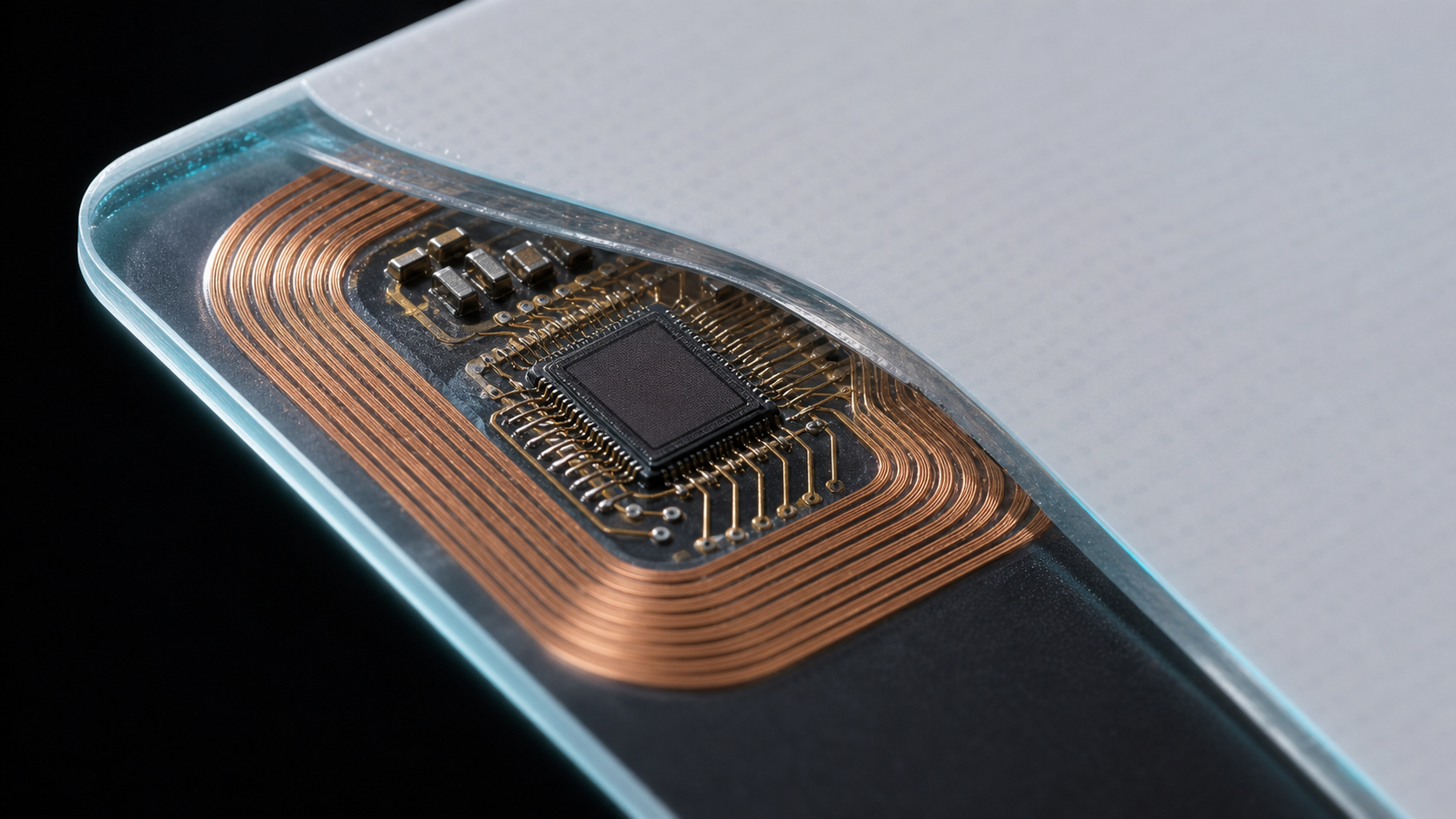
LF and HF systems couple magnetically in the reader's near field, so range is short and roughly tied to antenna size. UHF systems use far-field backscatter, radiating energy the way a radio does, which is why they reach much further but are more sensitive to their surroundings.
When should you use 125 kHz LF RFID?
Low-frequency tags typically operate at 125 kHz (with 134.2 kHz used for the ISO 11784/11785 animal-identification standard). Read range is very short — usually a few centimeters up to roughly 10 cm — and data rates are low.
LF's strength is robustness. Because long low-frequency wavelengths pass through water and tissue and are relatively tolerant of nearby non-ferrous material, LF is the traditional choice for legacy proximity access cards, livestock and pet microchips, and vehicle immobilizer keys. The chips are simple and inexpensive, but they offer little cryptographic security, so LF proximity credentials are easy to clone and are no longer a good fit for new high-security access deployments.
When should you use 13.56 MHz HF and NFC?
High-frequency RFID runs at 13.56 MHz and is the busiest band for credentials. The ISO/IEC 14443 'proximity' standard (Type A and Type B) governs contactless smart cards read at roughly 10 cm and underpins contactless bank cards, transit fare media and modern access control. ISO/IEC 15693 'vicinity' cards trade data rate for a longer working distance, and NFC (ISO/IEC 18092) is a 13.56 MHz superset that lets phones read and emulate HF cards.
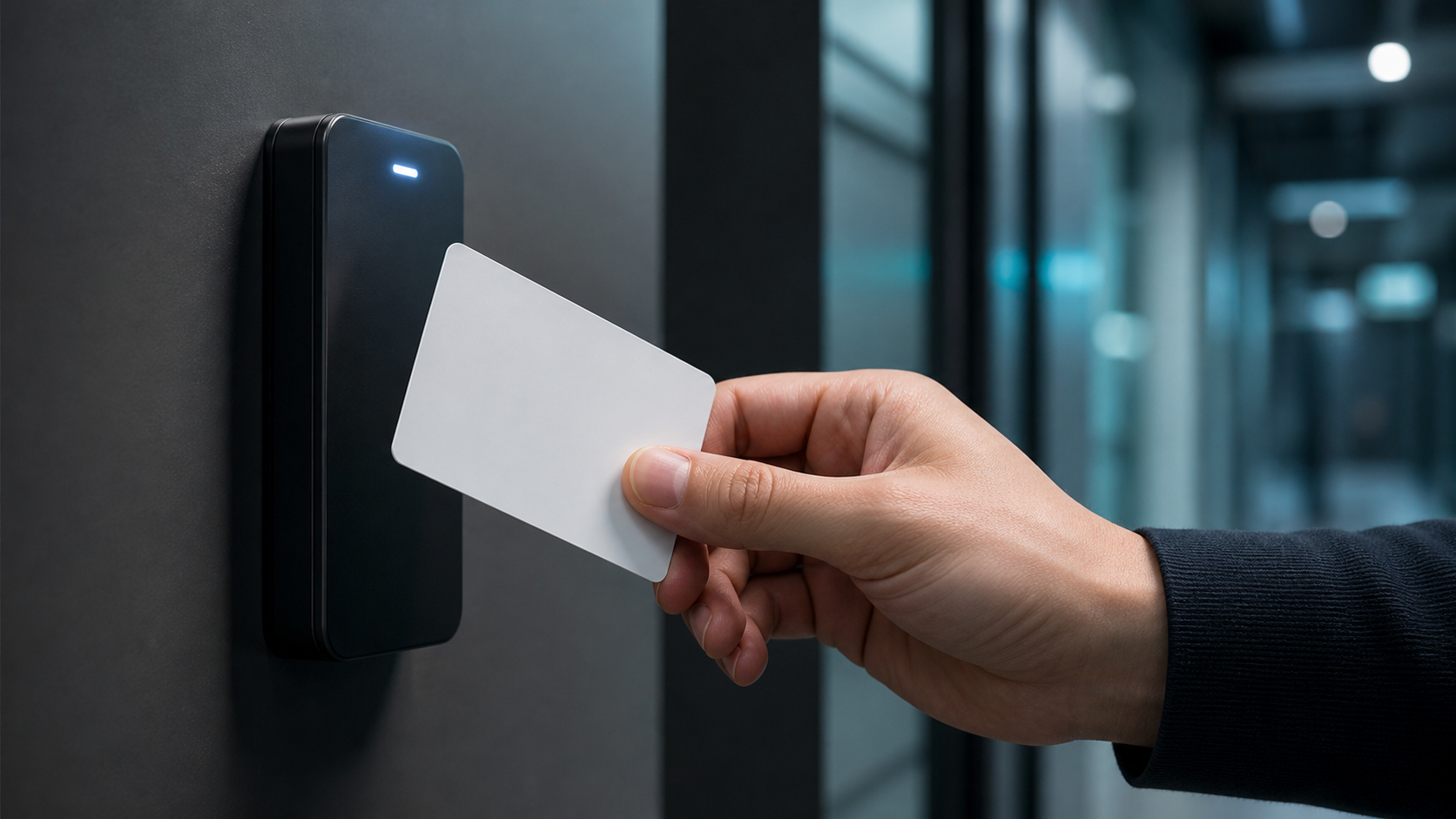
HF supports anti-collision, mutual authentication and on-card cryptography, so it is the practical floor for any application that needs real security or stored value. The trade-off is range: HF is a tap-or-present technology, not a read-across-the-room one, which is often exactly what you want for a controlled access point or a payment terminal.
When should you use UHF / RAIN RFID?
Ultra-high-frequency passive RFID operates in regional sub-bands between roughly 860 and 960 MHz — about 902–928 MHz under FCC rules in the United States and 865–868 MHz under ETSI in Europe. It follows the EPC Gen2 air-interface, standardized as ISO/IEC 18000-63, and is marketed under the vendor-neutral 'RAIN RFID' banner.
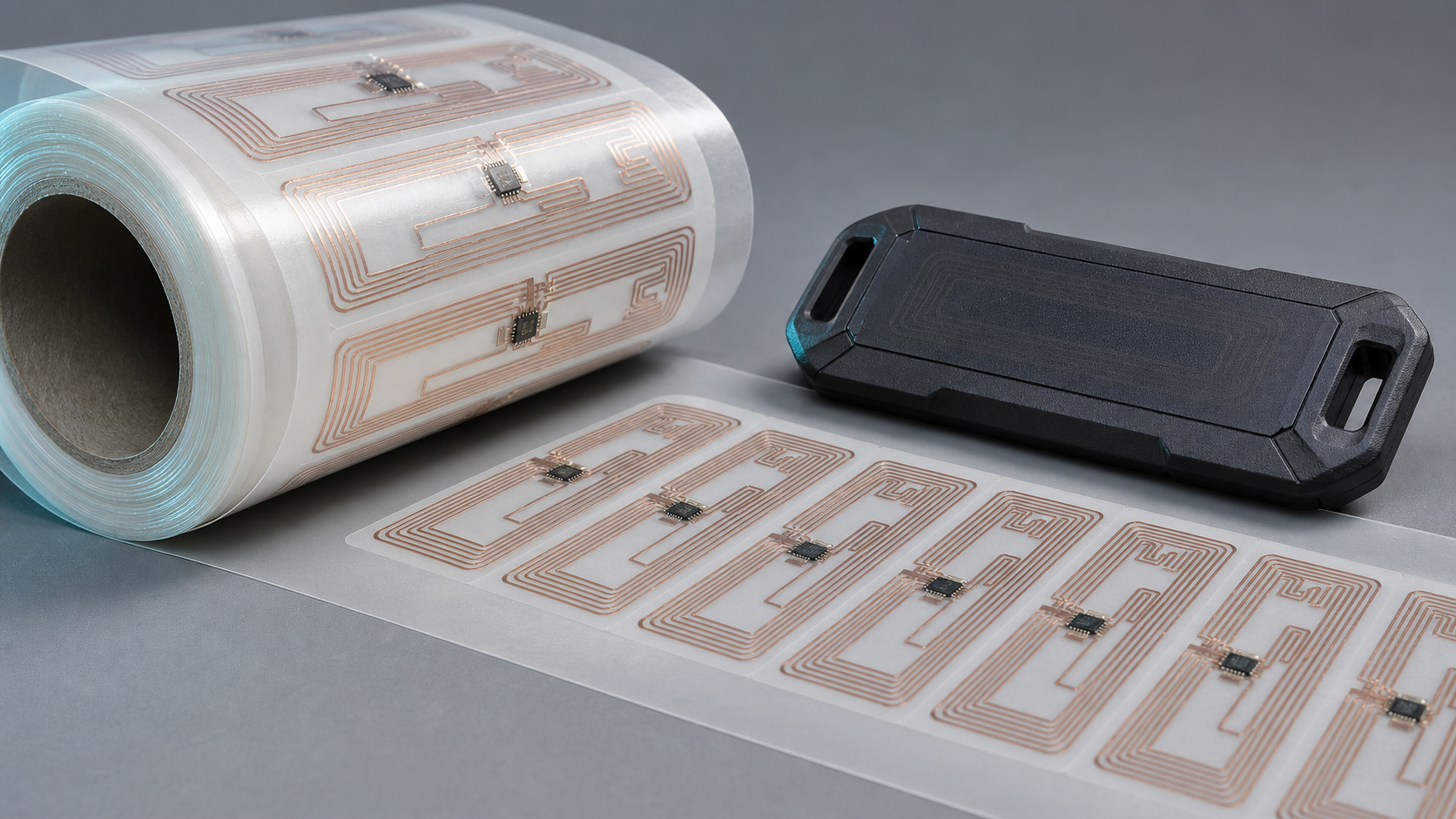
UHF's advantage is range and throughput: a single reader can capture hundreds of passive tags across several meters without line of sight, which makes it the backbone of retail inventory counts, warehouse and asset tracking, and supply-chain visibility. The catch is environment. UHF energy is absorbed by water and reflected by metal, so tags on liquids, dense products or metal surfaces need specially designed or on-metal inlays and careful antenna placement.
How do the trade-offs compare?
Range climbs as you move up in frequency — centimeters at LF, roughly 10 cm at HF, meters at UHF — and so does bulk read speed, since only UHF is built to inventory large tag populations quickly. Security and mature credential ecosystems favor HF, where cryptographic smart cards are the norm.
Environmental behavior runs the other way: LF and HF penetrate water and tolerate nearby material better than UHF, which is why liquid-filled and metal items are so much harder at UHF. Cost depends on volume and form factor, but simple LF and high-volume UHF inlays are generally cheaper than secure HF smart cards. The short version: pick HF for credentials and payment, UHF for counting many items at range, and LF mainly where you are matching legacy hardware.